
Melanie Mills
Small matters of memory
3-26 February 2026
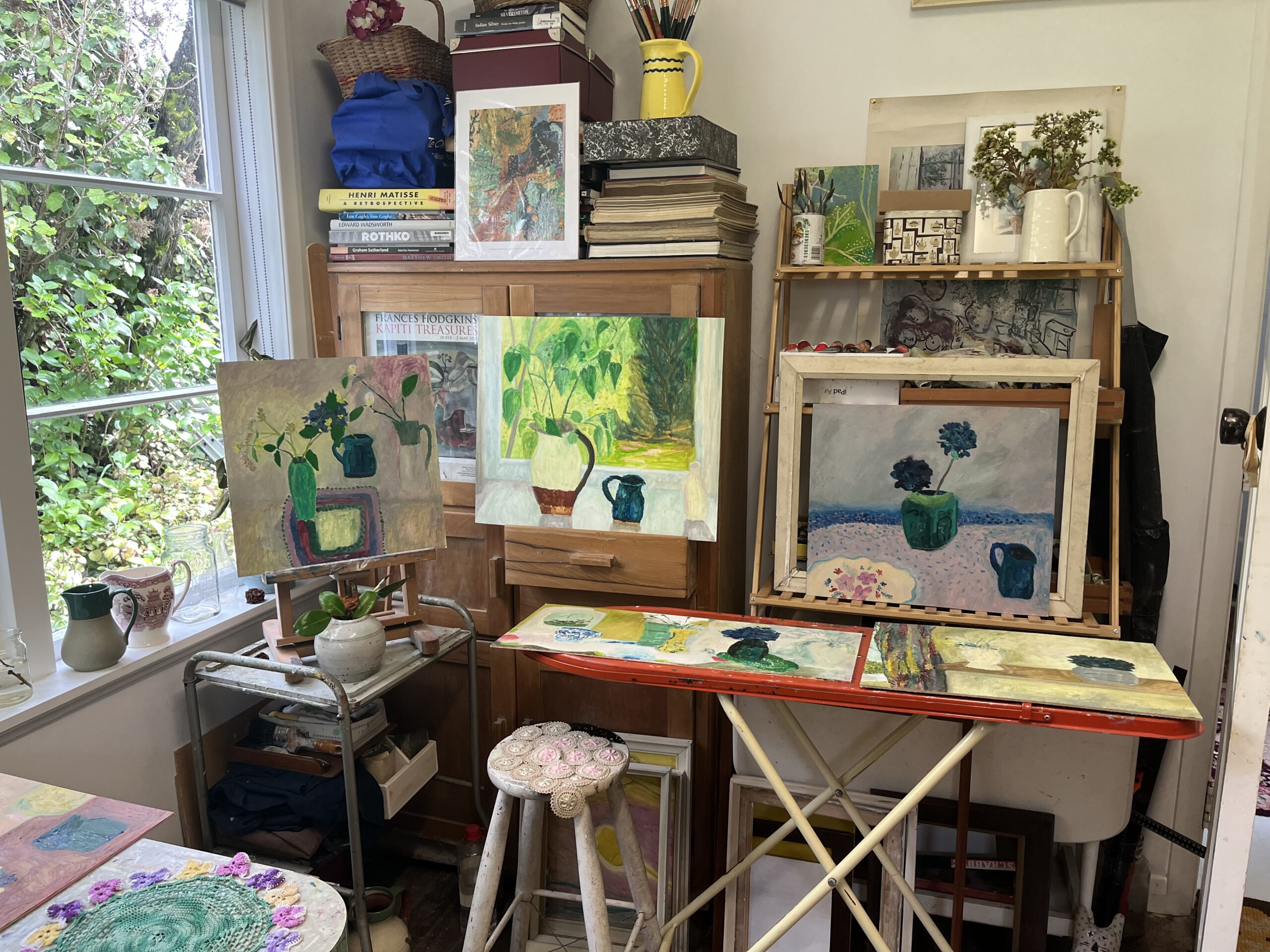
The paintings in Small Matters of Memory by Melanie Mills have been intuitively created, piece by piece, and layer by layer. Mills’ reverence for the visual and emotional qualities of still life echoes past masters, such as Joanna Margaret Paul, Winifred Nicholson, and Frances Hodgkins, while retaining a developing and recognisable personal style.
The first step in the process is selecting and arranging the subject matter. The objects in this show were drawn from Mills’ collection of household items, things in her possession for many years; the majority of them obtained second-hand, chosen for what they might bring to a composition. These are items that once belonged in someone’s home, now long forgotten. In painting these objects, Mills’ is breathing life into the once owned, then removed and discarded, repurposing them, reminding us of their history and the character they possess. Small decorative cloths or doilies, for example, are a recurring element in Small Matters of Memory. Once skilfully handcrafted by women in an attempt to bring something of a joyful presence into a domestic household, each of them holding a little bit of their previous owner, allowing the artist new possibilities of colour and texture. Imperfect and often unremarkable vases and jars, roadside leaves, and simple flowers add to the feeling of reflection and simplicity.
Where these works really start to come together, however, is in the arrangement of the scenes. For Mills, this is one of the most enjoyable parts of the process. She constructs the still life in front of her somewhere in her studio, at eye-level (a point of view learned from Vanessa Bell), at table height, or on a windowsill (Hodgkins and Nicholson). She can simply move the easel around the room depending on the desired viewpoint. At some point, during the creation of the composition, the physical objects will recede. Their painted counterparts will become the thing that needs to be rearranged and fine tuned, but it’s never clear how far through the process this will happen. At this stage, it becomes an immediate, unconscious process of imagination and instinct.
And that’s where Mills’ painterly sensibilities emerge. These works possess radiance and intensity. The colours range from muted to luminous, and play off each other delightfully. Take the work Red Camellias and Mallows, where pastel tones and spectral forms contrast with vivid colours and weighty textures to create something that feels alive, albeit in a world of its own comprehension. Throughout Small Matters of Memory, objects have personality and presence, embracing flexible perspectives and decorative impulses to animate their canvases. This is the case with Spring, where the dissolution of clear boundaries and rules fills this beautiful, serene work with a sense of resonant dynamism.
And this is the paradox of Mills’ work – calm, hushed scenes that hum with a quiet intensity. It’s a dichotomy that compels us to spend time with these works, to allow them to reveal themselves to us, and to learn how they may resonate. Alex Thornton
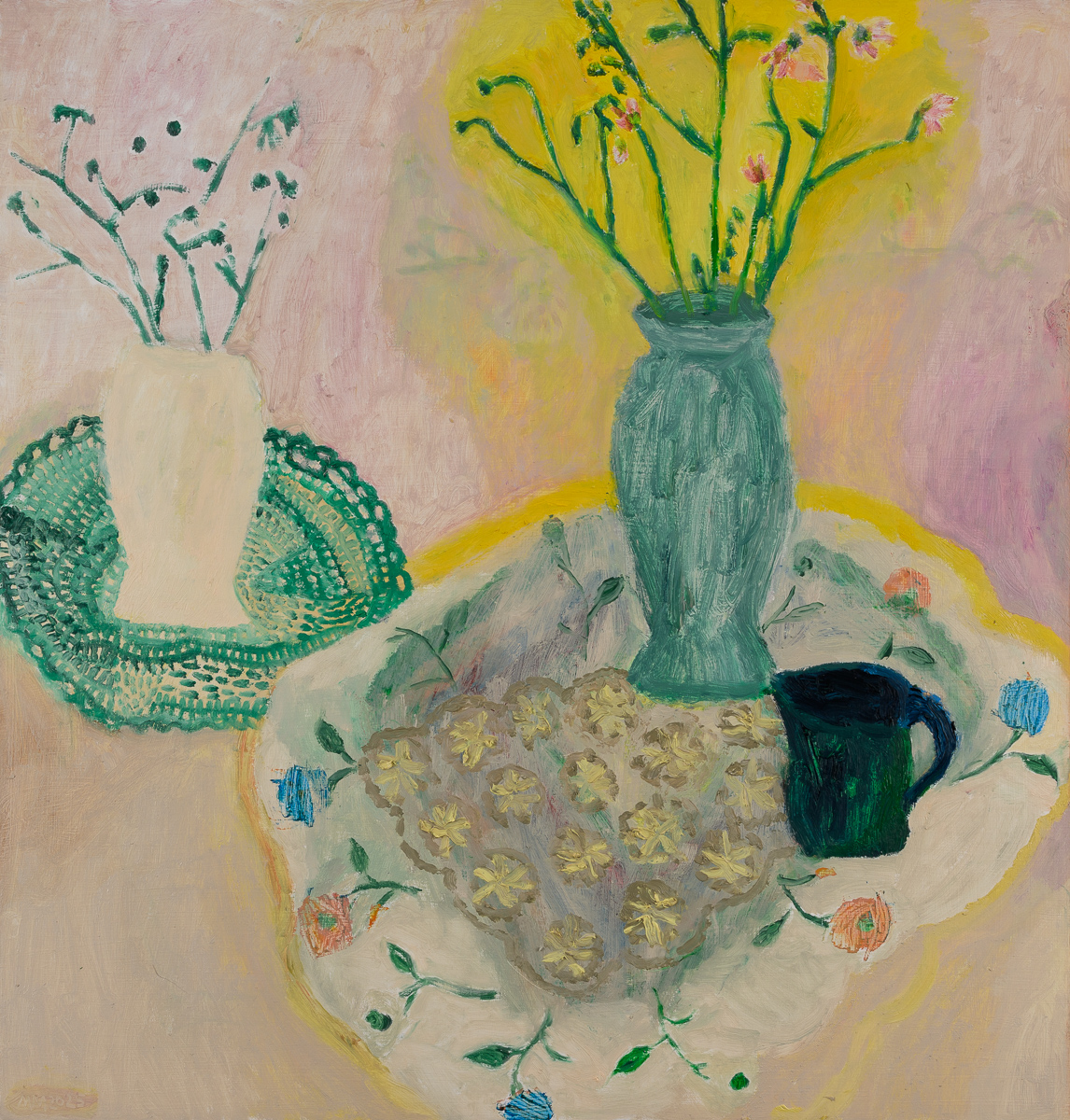
Green vase with small cloths, October 2025, oil on board, 555 x 530 mm $5500
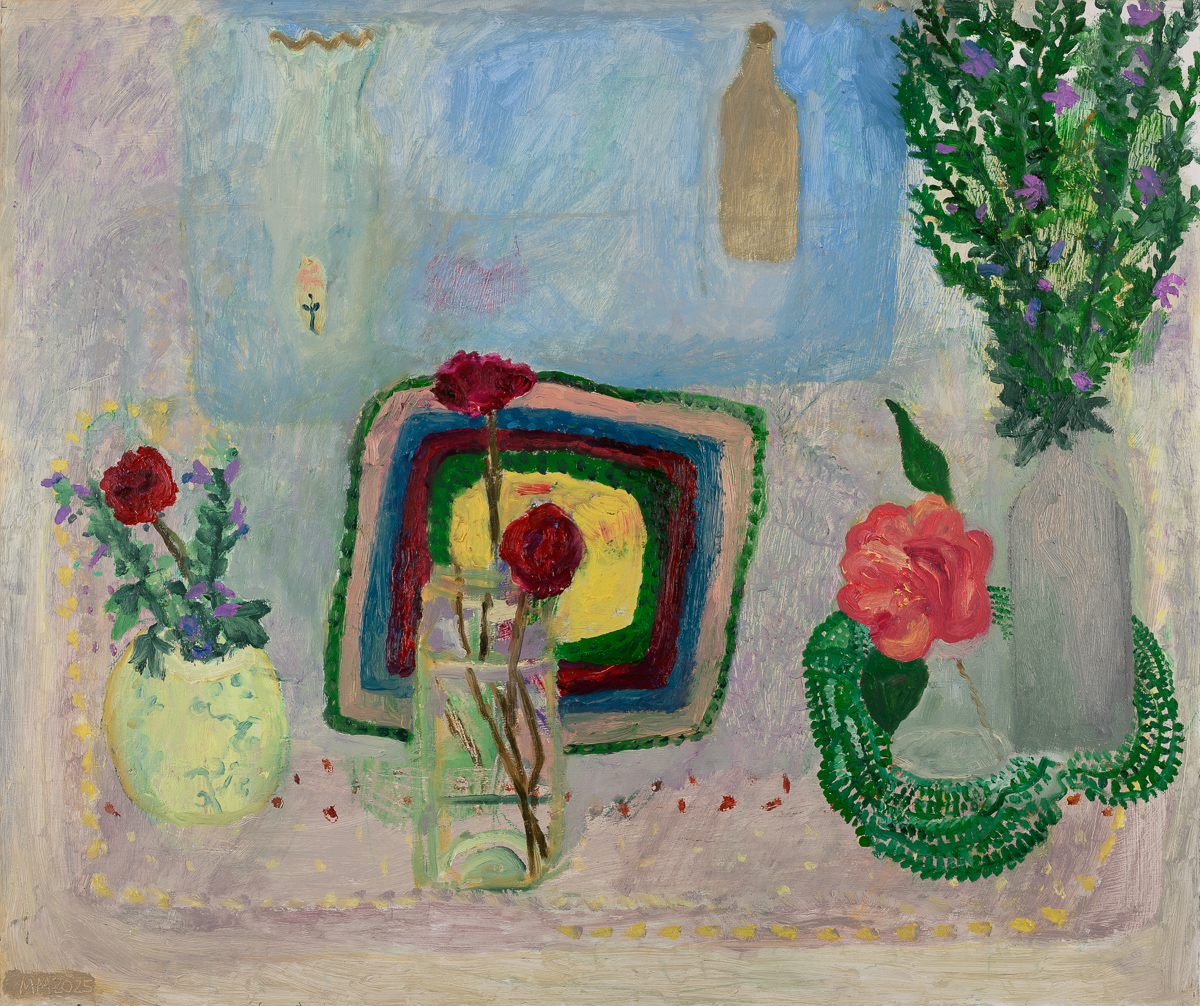
Red camellias and mallows, October 2025, oil on board, 470 x 590 mm $5200
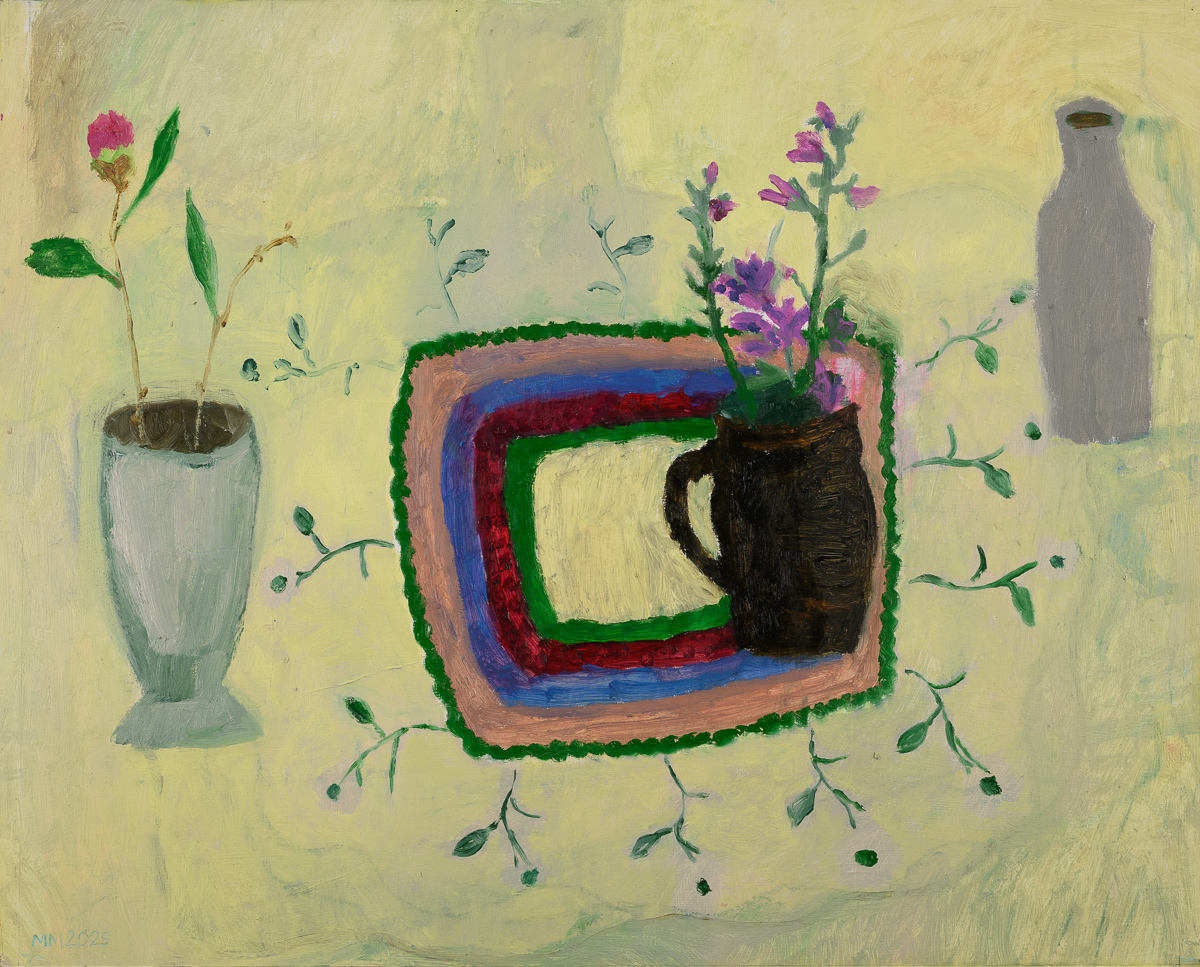
Yellow cloth, mallow flower, October 2025, oil on board, 420 x 500 mm $4200
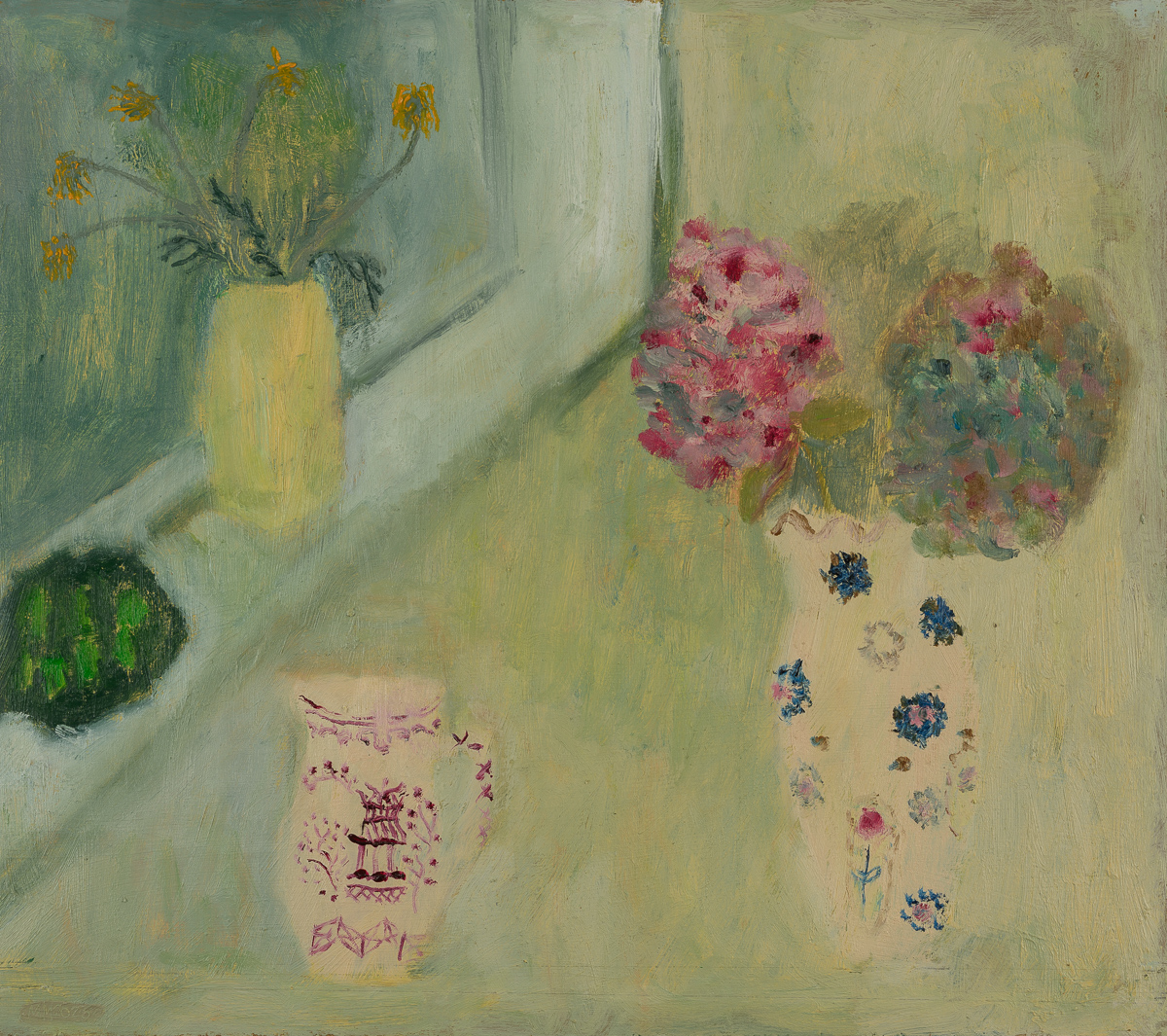
Yellow vase by window, July 2025, oil on board, 445 x 540 mm $4200
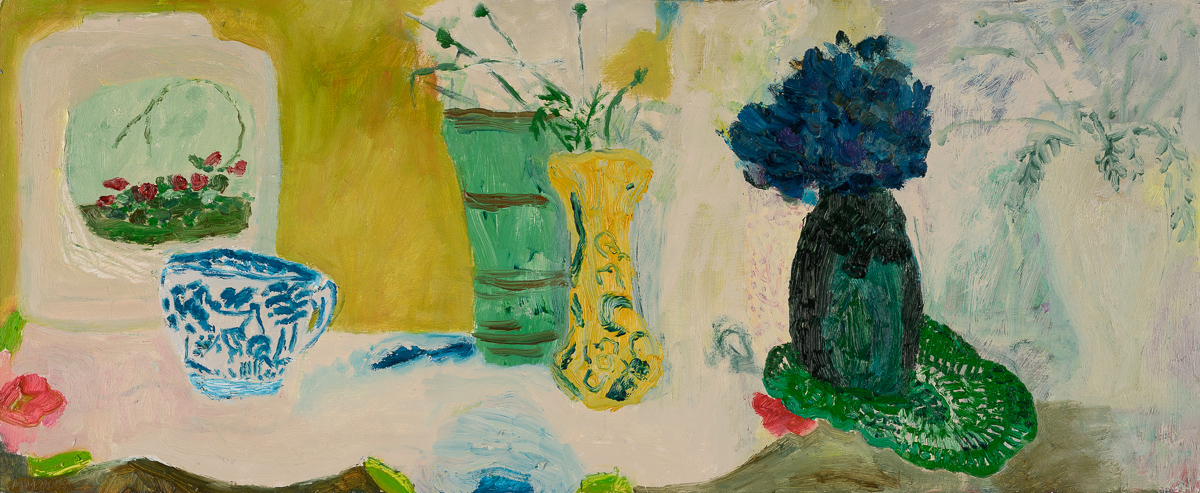
Shelf, September 2025, oil on board, 255 x 620 mm $3800
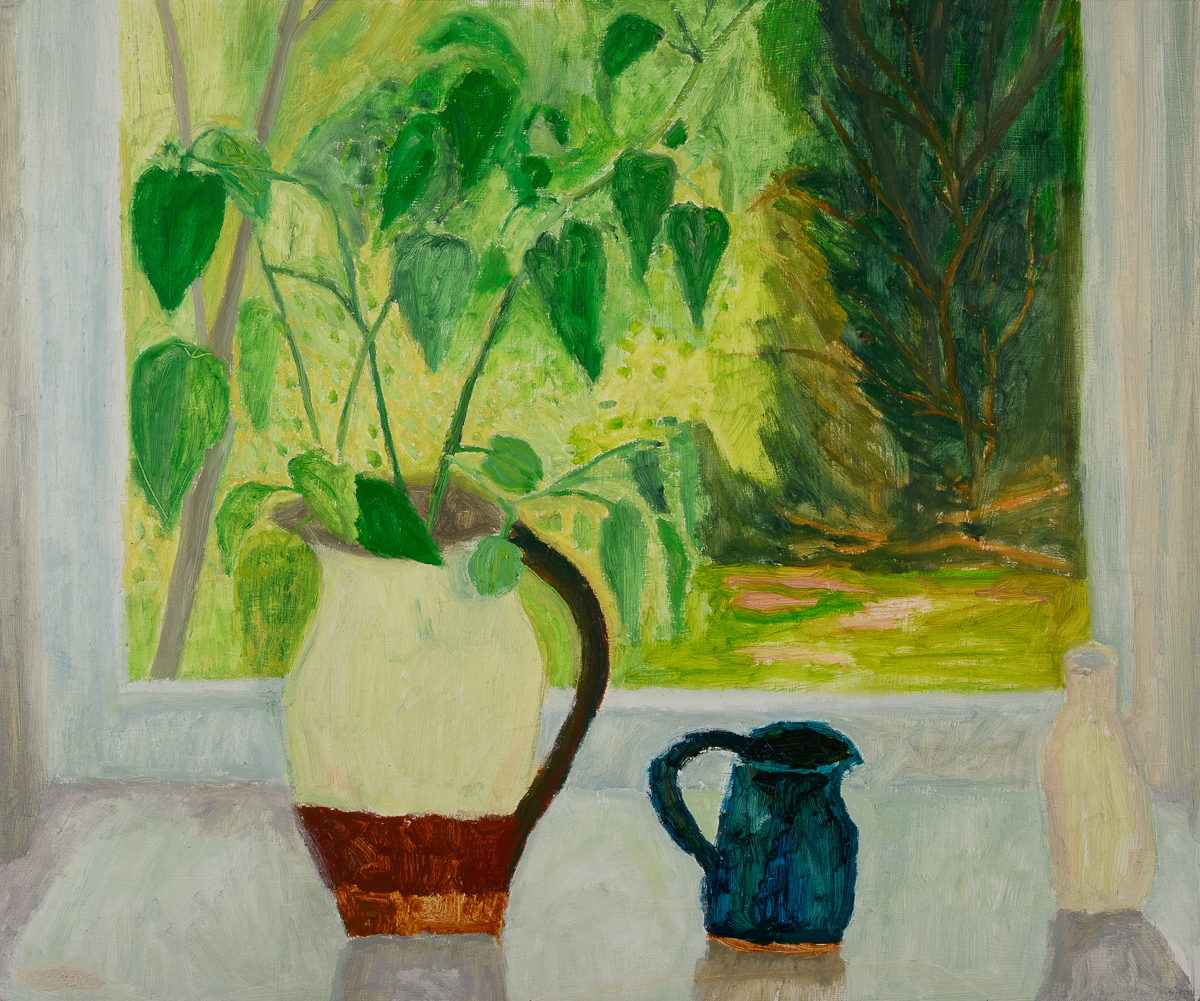
Cape Gooseberry leaves on windowsill, June 2025, oil on board, 470 x 590 mm $4850
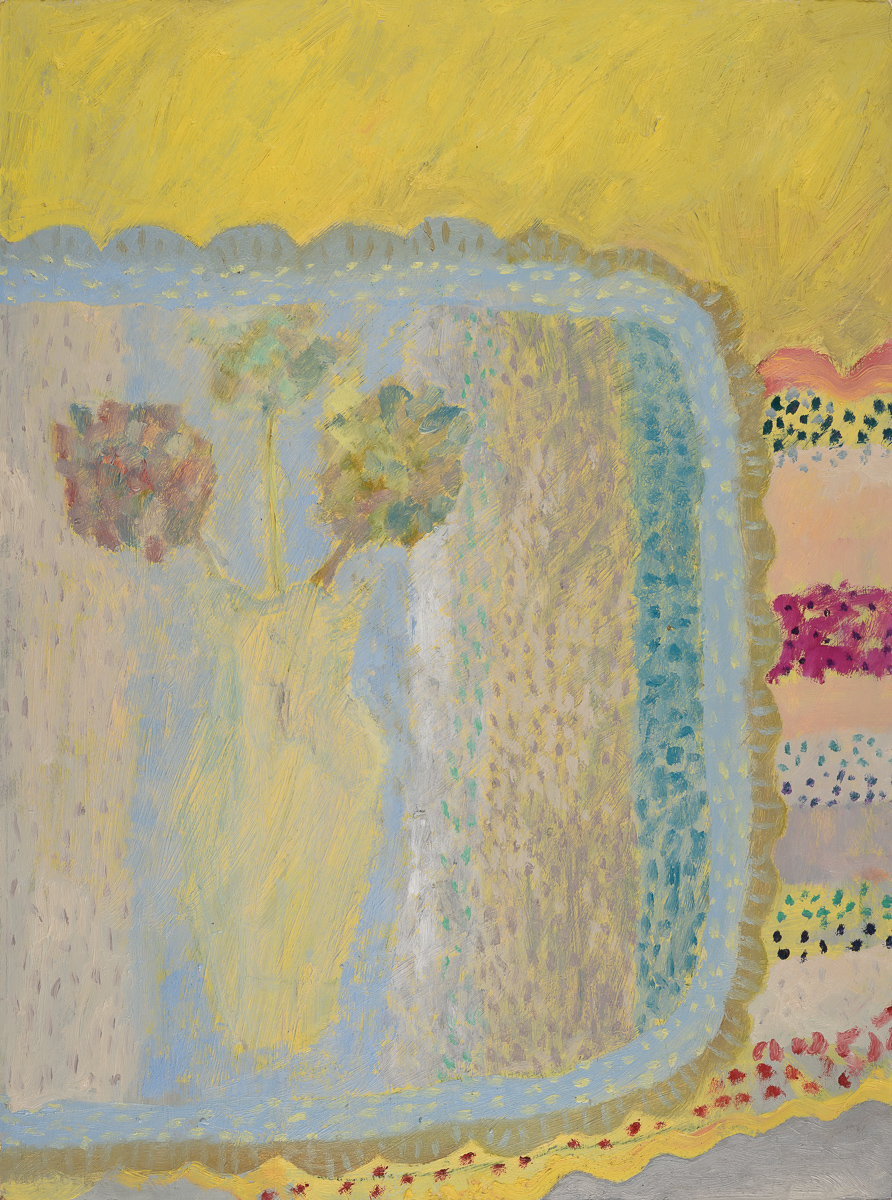
Striped cloths, June 2025, oil on board, 470 x 350 mm $2900
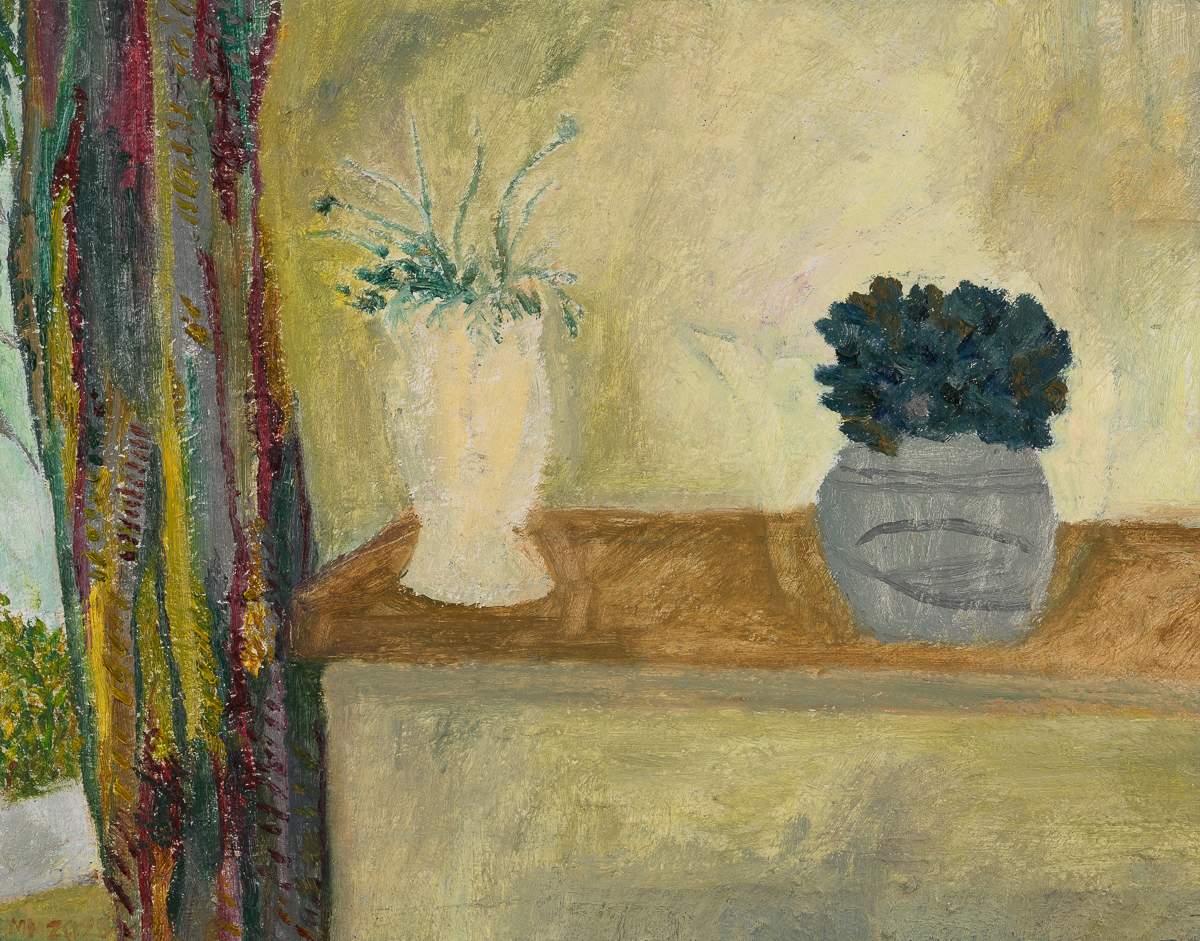
Winter, June 2025, oil on board, 360 x 460 mm $2800
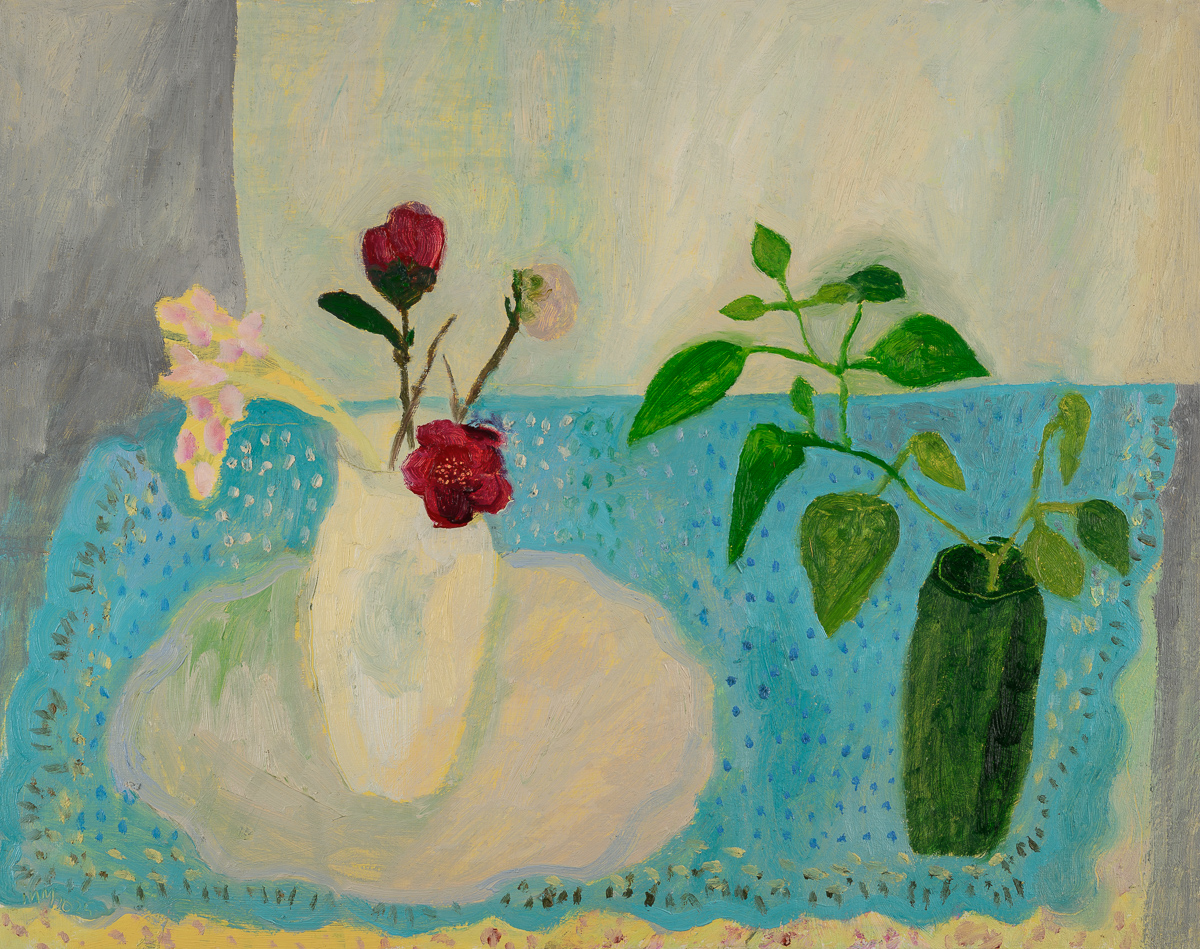
Blue cloth and red amellias, August 2025, oil on board 400 x 510 mm $3500
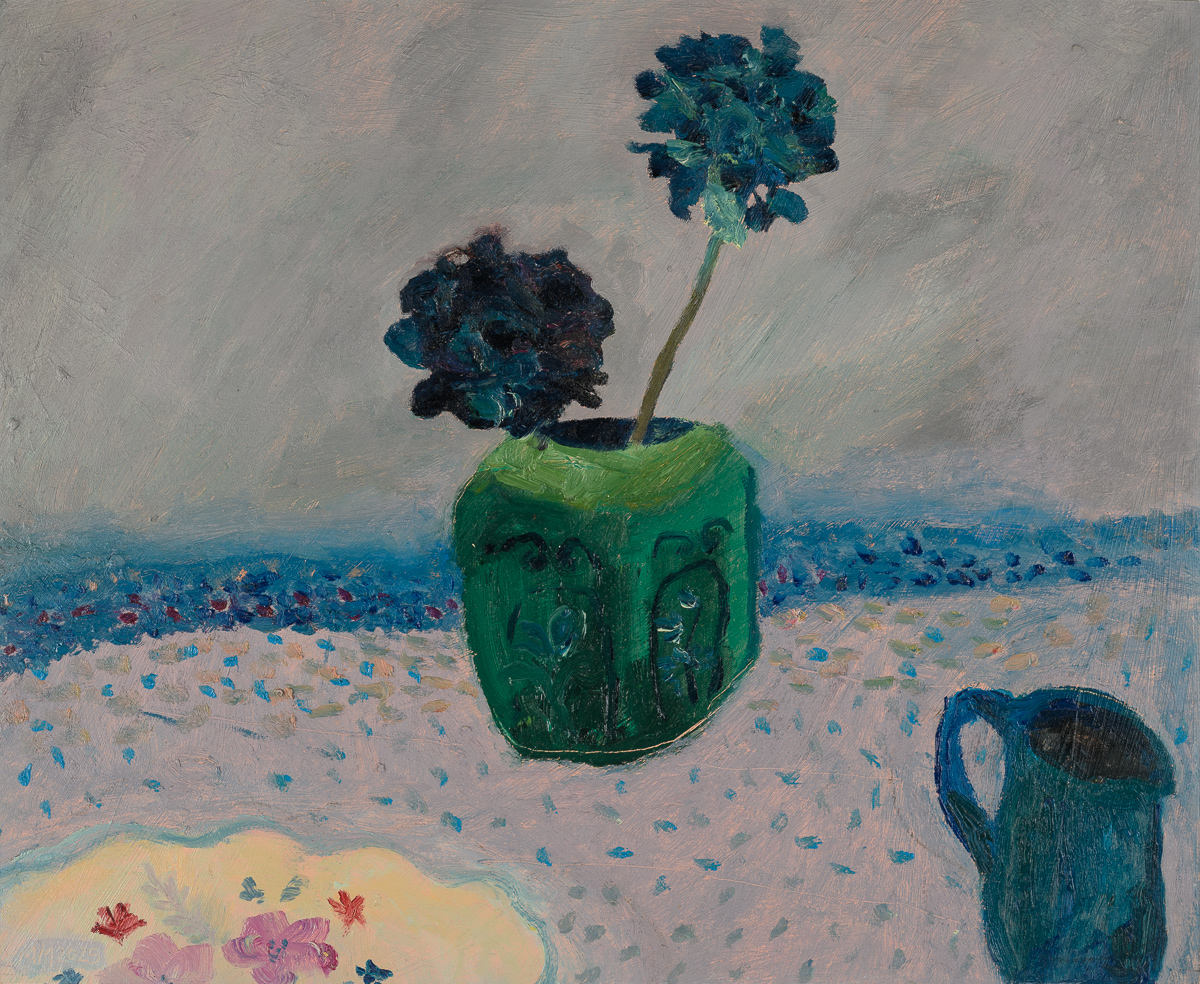
Ginger jar and blue jug, June 2025, oil on board, 390 x 460 mm $3100
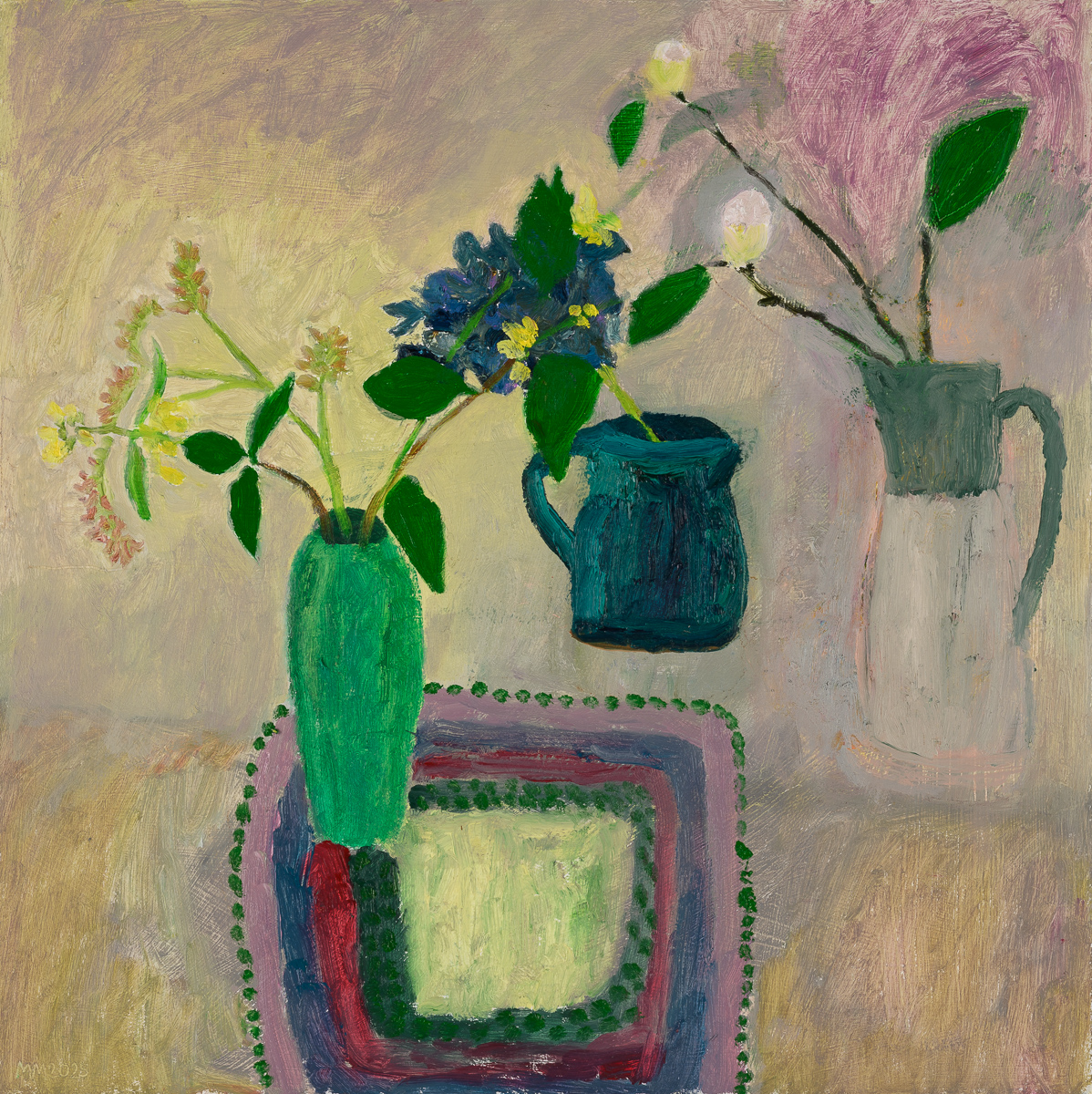
Spring, September 2025, oil on board, 400 x 400 mm $3400
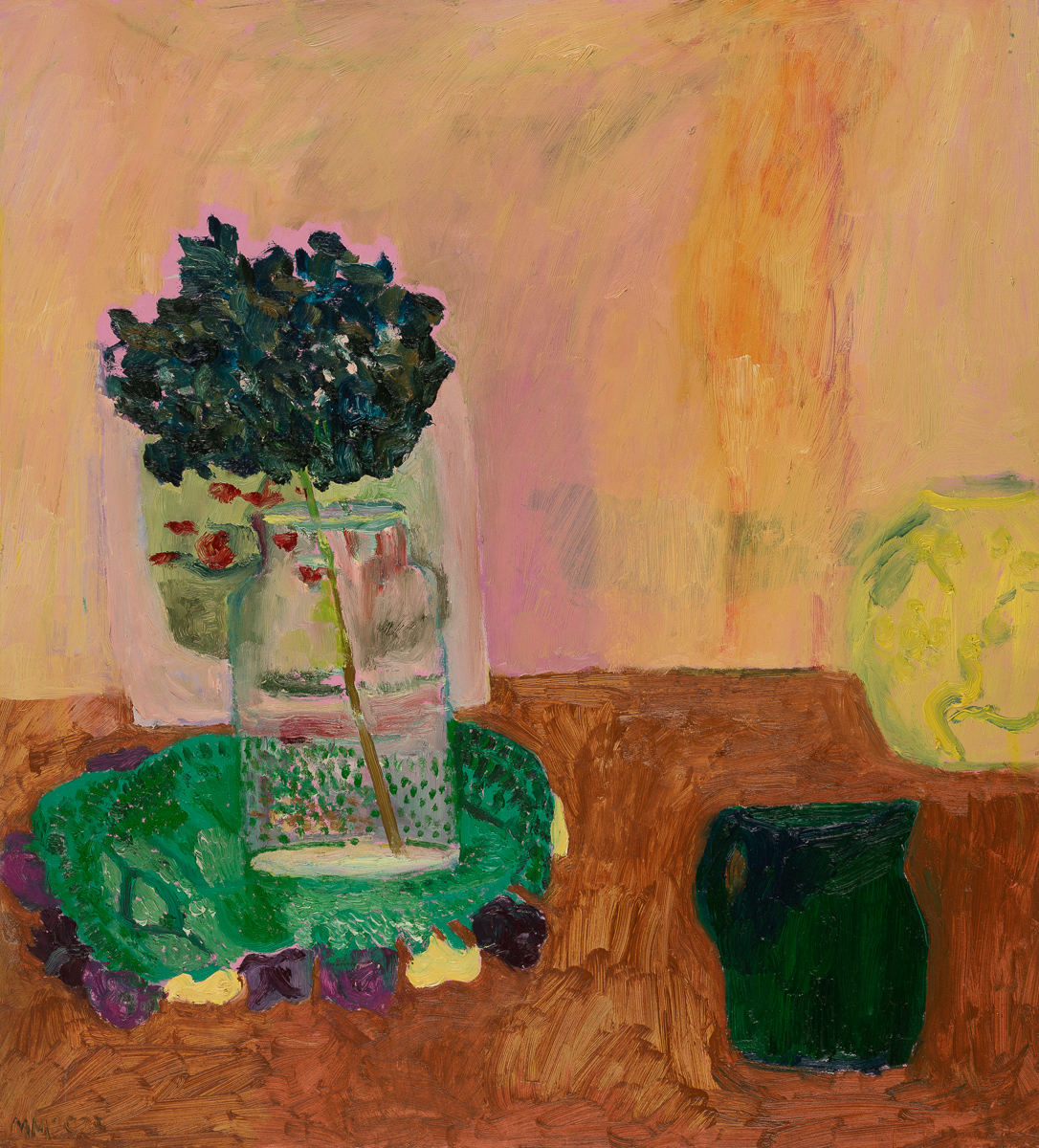
Glass jar on green cloth, August 2025, oil on board, 400 x 360 mm $2800
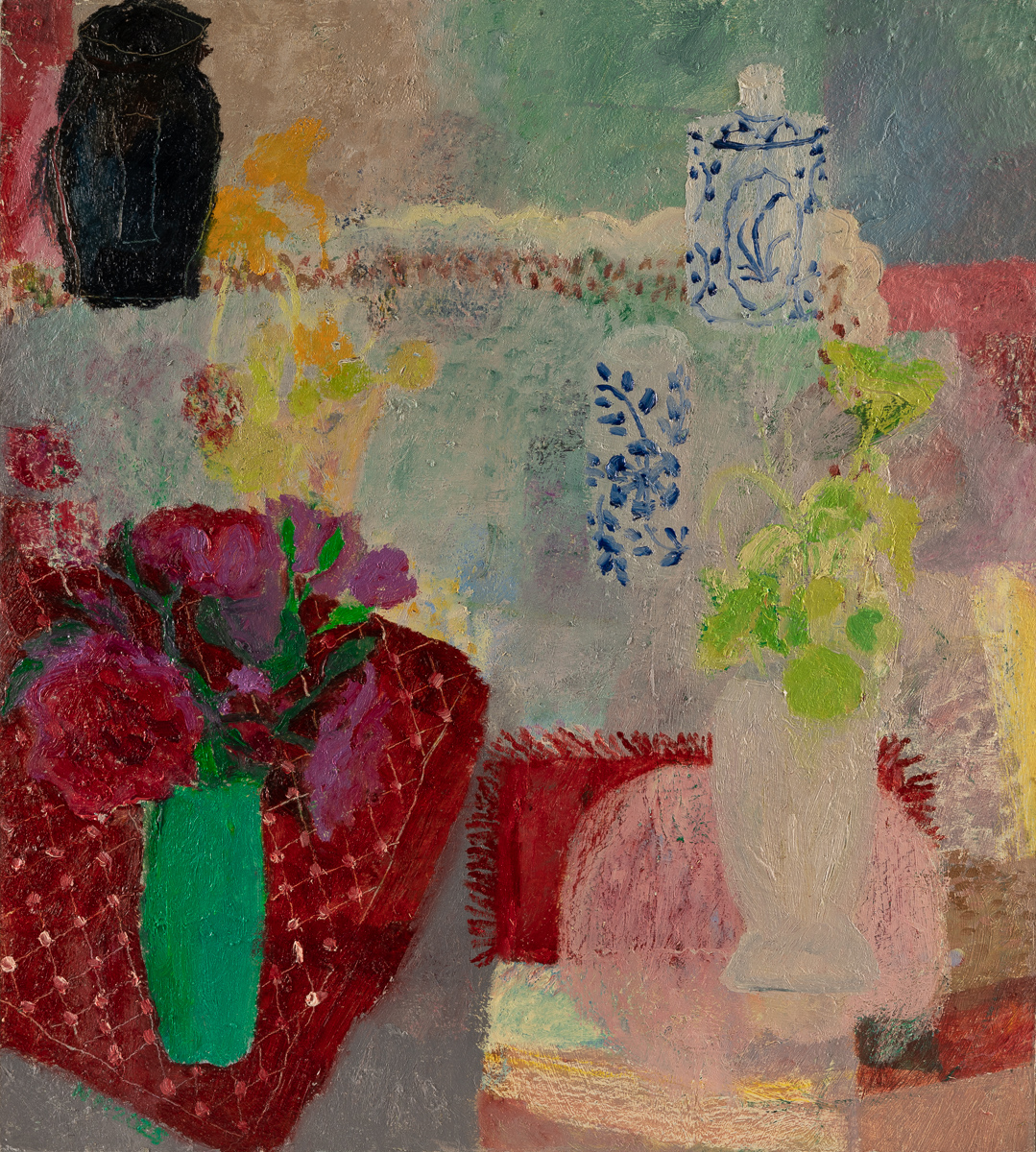
Early roses in a green vase, November 2025, oil on board, 530 x 475 mm $5200
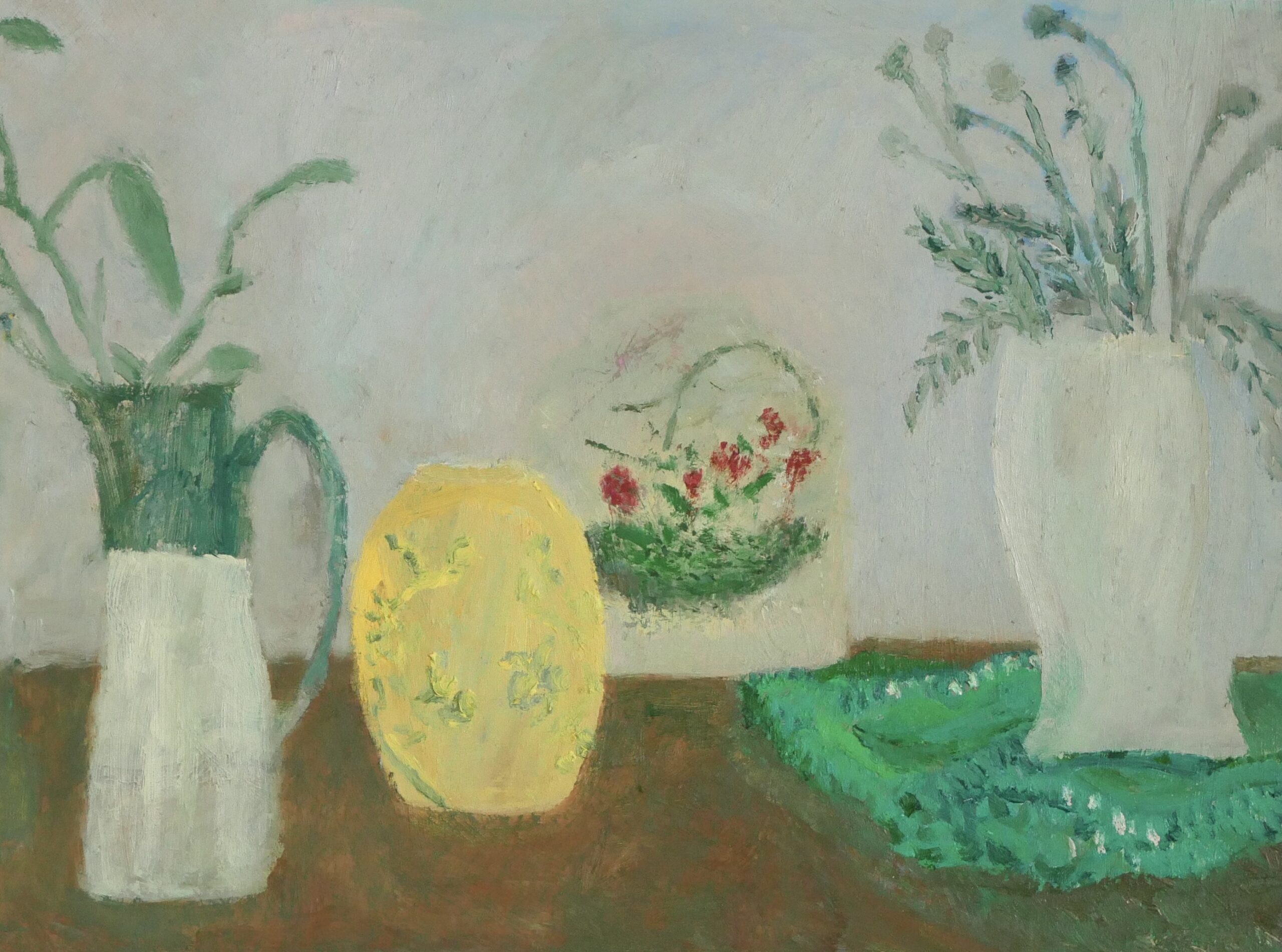
Still life with yellow jar (2025) oil on board, 295 x 390 mm $2600
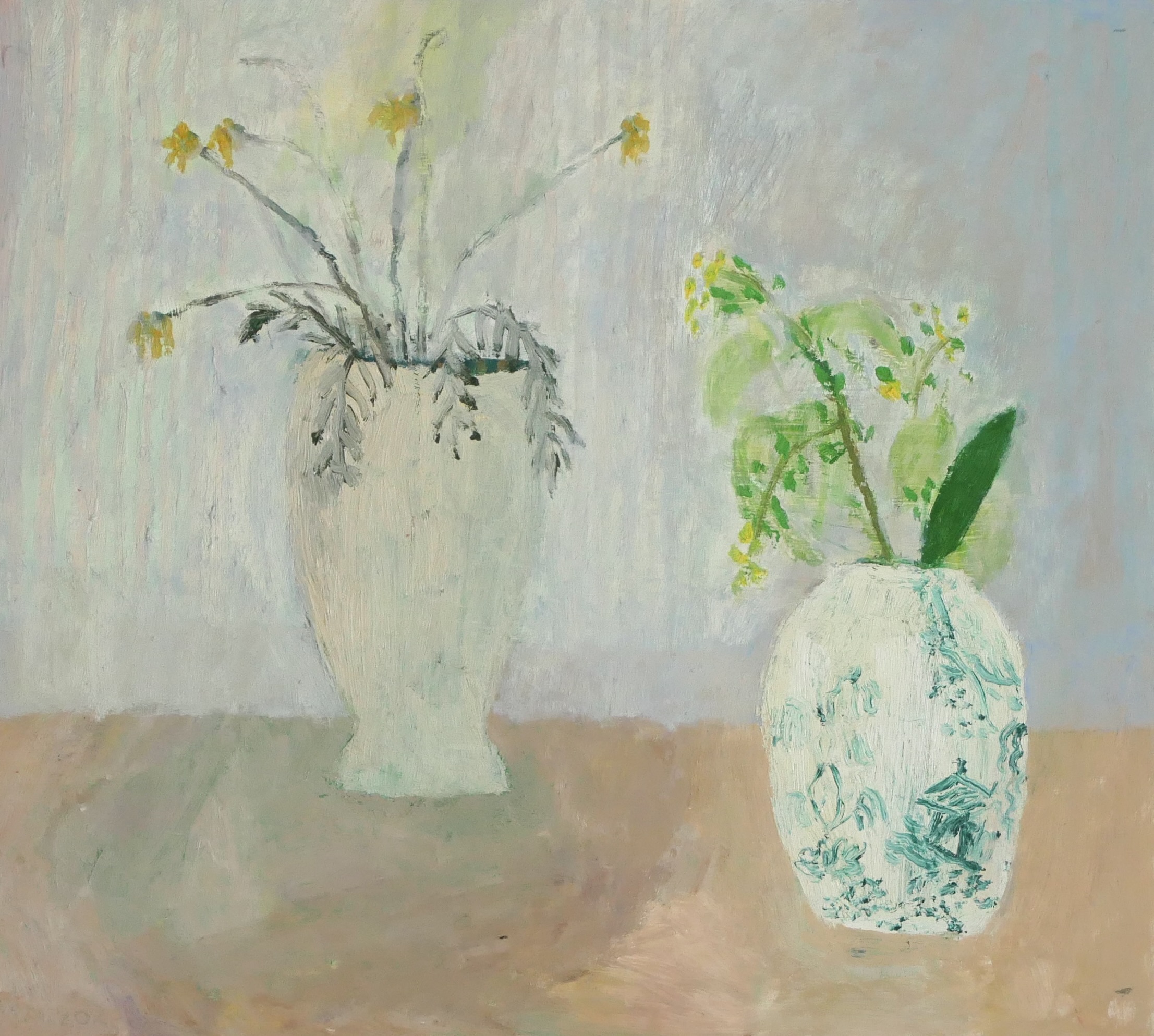
Two vases (2025) oil on board, 300 x 330 mm $2600